
32+ synonyms for Sensation can be useful when you want to make your writing clearer, more precise, or less repetitive. The word synonyms for Sensation has several meanings, so the best replacement depends on what you mean. You might be talking about an emotion, a physical sensation, an opinion, an intuition, or an emotional response.
For example, synonyms for feeling can become emotion, sentiment, or mood when discussing emotions; sensation or perception when describing physical awareness; and impression, view, or opinion when discussing what someone thinks. This guide explains more than 32+ synonyms for Sensation useful alternatives, shows the differences between them, and provides examples for school, work, emails, websites, and everyday conversation.
Quick Answer
Common synonyms for feeling include emotion, sensation, sentiment, mood, response, reaction, impression, perception, opinion, attitude, belief, intuition, instinct, awareness, experience, empathy, affection, and desire. The correct choice depends on whether feeling means an emotion, physical sensation, personal opinion, or intuitive sense.
Quick List: 40+ Useful Alternatives to Feeling

Closest and general alternatives
- Emotion
- Sensation
- Sentiment
- Mood
- Response
- Reaction
- Impression
- Perception
- Experience
- Awareness
- Attitude
- Opinion
- Belief
- Instinct
- Intuition
- Affection
- Desire
- Passion
- Concern
- Empathy
More formal synonyms for feeling
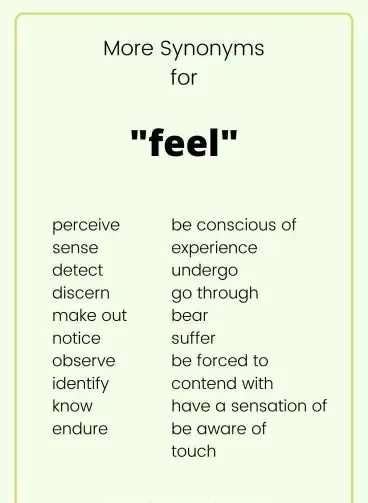
- Emotional state
- Emotional response
- Psychological state
- Subjective experience
- Personal perception
- Personal assessment
- Sentiment
- Appraisal
- Disposition
- Sensory perception
Casual alternatives
- Vibe
- Gut instinct
- Gut reaction
- Hunch
- Sense
- Take
- Thought
- Mood
The important point is that these words are not all interchangeable. Emotion refers to an emotional state, while synonyms for feeling usually refers to something physically experienced. Opinion means a belief or judgment, while intuition describes an understanding that may come without conscious reasoning.
Formal Alternatives to synonyms for feeling
Formal writing often benefits from a more precise noun than feeling. Choose the word that describes the exact idea rather than simply choosing the most sophisticated-looking option.
1. Emotion
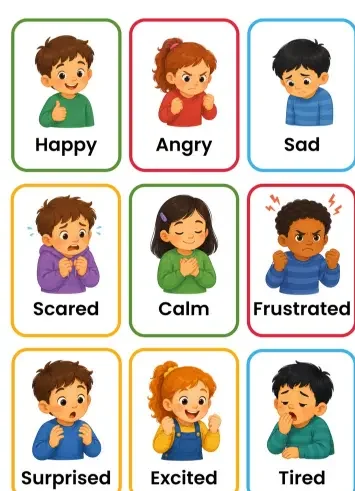
Meaning: A strong internal response such as happiness, sadness, fear, or anger.
Explanation: Emotion is one of the closest alternatives when feeling refers to an emotional state.
Example: The speaker expressed strong emotion during the presentation.
Best Use: Academic, professional, psychological, and general writing.
Worst Use: Avoid it when you mean a physical sensation.
Tone: Neutral to formal.
2. Sensation

Meaning: A physical or sensory experience.
Explanation: Use sensation when someone physically notices heat, pressure, pain, cold, movement, or another bodily experience.
Example: She experienced a strange sensation in her hand.
Best Use: Medical, scientific, descriptive, and formal writing.
Worst Use: It is not normally a direct replacement for emotional feeling.
Tone: Formal and precise.
3. Sentiment
Meaning: An attitude, emotional view, or shared feeling about something.
Explanation: Sentiment often describes an emotional attitude held by a person or group.
Example: Public sentiment toward the proposal has changed.
Best Use: Reports, journalism, business, politics, and formal analysis.
Worst Use: Avoid it for simple physical sensations.
Tone: Formal and analytical.
4. Emotional Response
Meaning: The way someone emotionally reacts to an event or situation.
Explanation: This phrase is more precise than feeling when describing a reaction to something.
Example: The advertisement created a strong emotional response.
Best Use: Marketing, psychology, research, and professional writing.
Worst Use: It can sound too technical in casual conversation.
Tone: Formal and descriptive.
5. Perception
Meaning: The way someone understands, notices, or interprets something.
Explanation: Perception can replace feeling when the word refers to how someone views a situation.
Example: Public perception of the company improved.
Best Use: Business, research, education, and analytical writing.
Worst Use: It should not replace an emotional feeling automatically.
Tone: Formal and analytical.
6. Impression
Meaning: An idea or opinion formed from an experience.
Explanation: An impression is often what you think or sense about someone or something after observing it.
Example: My first impression of the new manager was positive.
Best Use: Reviews, essays, emails, and everyday professional writing.
Worst Use: Avoid it when describing a strong physical sensation.
Tone: Neutral to formal.
7. Appraisal
Meaning: A judgment or evaluation of something.
Explanation: Appraisal is useful when a feeling is actually an assessment or judgment.
Example: The employee’s appraisal of the proposal was favorable.
Best Use: Business, research, psychology, and formal reports.
Worst Use: It may sound unnatural for ordinary emotions.
Tone: Formal.
8. Assessment
Meaning: A considered judgment about something.
Explanation: Use assessment when the supposed feeling is based on evaluating a situation.
Example: Her assessment of the situation was accurate.
Best Use: Academic, workplace, and professional writing.
Worst Use: Do not use it simply for happiness, sadness, or affection.
Tone: Formal.
9. Disposition
Meaning: A person’s usual emotional character or tendency.
Explanation: Disposition describes someone’s general temperament rather than one temporary feeling.
Example: He has a calm disposition.
Best Use: Formal descriptions of personality.
Worst Use: Avoid it for a single short-lived emotion.
Tone: Formal.
10. Emotional State
Meaning: A person’s current emotional condition.
Explanation: This is useful when you need to describe feelings in a precise, neutral way.
Example: Stress can affect a person’s emotional state.
Best Use: Academic, medical, workplace, and psychological contexts.
Worst Use: It can sound overly clinical in friendly conversation.
Tone: Formal and neutral.
11. Psychological State
Meaning: A person’s current mental or emotional condition.
Explanation: This is broader than emotion and may include thoughts, emotions, and mental responses.
Example: Sleep can influence a person’s psychological state.
Best Use: Academic and professional writing.
Worst Use: Avoid it when discussing a simple everyday emotion.
Tone: Highly formal.
12. Subjective Experience
Meaning: Something personally experienced or interpreted by an individual.
Explanation: This phrase is useful when the writer wants to emphasize that an experience differs from person to person.
Example: Pain is a highly subjective experience.
Best Use: Research, psychology, healthcare, and academic writing.
Worst Use: It sounds unnecessarily technical in casual writing.
Tone: Academic.
13. Awareness
Meaning: Conscious recognition or knowledge of something.
Explanation: Awareness can replace feeling when someone notices an internal or external condition.
Example: She developed greater awareness of her surroundings.
Best Use: Education, psychology, business, and professional communication.
Worst Use: It does not mean the same as an emotion.
Tone: Neutral to formal.
14. Attitude
Meaning: A person’s way of thinking or feeling about something.
Explanation: Attitude describes a relatively stable viewpoint rather than a momentary emotion.
Example: His attitude toward teamwork is positive.
Best Use: Workplace, school, and social analysis.
Worst Use: Avoid it for physical sensations.
Tone: Neutral and professional.
15. Affection
Meaning: A feeling of fondness, warmth, or care.
Explanation: Affection is a narrower emotional term and works when the feeling involves liking or caring for someone.
Example: She showed great affection for her younger brother.
Best Use: Personal, literary, and relationship writing.
Worst Use: It cannot replace every type of feeling.
Tone: Warm and neutral.
Semi-Formal and Neutral Alternatives
These choices work well in everyday writing, websites, school assignments, emails, and general communication.
16. Reaction
Meaning: How someone responds to an event.
Explanation: A reaction may be emotional, physical, or behavioral. It is broader than feeling.
Example: His reaction to the news was unexpected.
Best Use: General writing and conversation.
Worst Use: Avoid it if you specifically mean an internal emotion.
Tone: Neutral.
17. Response
Meaning: An answer or reaction to something.
Explanation: Response is slightly broader and often sounds more professional than feeling.
Example: We received a positive response from customers.
Best Use: Business, email, surveys, and websites.
Worst Use: It may sound impersonal when discussing intimate emotions.
Tone: Neutral and professional.
18. Mood
Meaning: A person’s temporary emotional condition.
Explanation: Mood is closely related to feeling but usually describes an overall emotional state.
Example: She was in a cheerful mood.
Best Use: Everyday writing and conversation.
Worst Use: It is less suitable for a single physical sensation.
Tone: Neutral.
19. Opinion
Meaning: What someone thinks about a subject.
Explanation: Use opinion when feeling means a personal view.
Example: What is your opinion of the new design?
Best Use: Essays, surveys, discussions, and professional communication.
Worst Use: Do not use it for emotions such as fear or happiness.
Tone: Neutral.
20. View
Meaning: A person’s way of thinking about something.
Explanation: View is concise and useful when someone’s feeling is actually a viewpoint.
Example: She shared her view on the issue.
Best Use: Essays, meetings, articles, and emails.
Worst Use: It is not an emotional synonym in every context.
Tone: Neutral.
21. Belief
Meaning: Something a person accepts as true or considers likely.
Explanation: Belief is stronger and more cognitive than feeling.
Example: His belief that the plan would work gave the team confidence.
Best Use: Academic, professional, and personal writing.
Worst Use: Avoid using it for temporary emotions.
Tone: Neutral to formal.
22. Instinct
Meaning: A natural response or tendency that does not require conscious reasoning.
Explanation: Instinct is useful when someone has an immediate internal reaction.
Example: My instinct told me to wait.
Best Use: Decision-making and everyday conversation.
Worst Use: It should not replace ordinary emotions.
Tone: Neutral.
23. Intuition
Meaning: An immediate understanding without conscious reasoning.
Explanation: Intuition often replaces feeling in phrases such as “I have a feeling something is wrong.”
Example: My intuition told me that something was missing.
Best Use: Personal decisions, essays, storytelling, and reflective writing.
Worst Use: Avoid presenting intuition as proven fact.
Tone: Neutral.
24. Concern
Meaning: Worry or interest about a particular issue.
Explanation: When feeling means worry, concern is usually more precise.
Example: We understand your concern about the delay.
Best Use: Customer service, business emails, and professional writing.
Worst Use: It does not mean general happiness or excitement.
Tone: Professional and polite.
25. Empathy
Meaning: The ability to understand or share another person’s emotional experience.
Explanation: Empathy is related to feeling but is specifically about understanding another person’s emotions.
Example: Good customer service requires empathy.
Best Use: Healthcare, customer service, leadership, and relationships.
Worst Use: Do not use it as a general synonym for emotion.
Tone: Warm and professional.
26. Experience
Meaning: Something personally encountered or lived through.
Explanation: An experience can include feelings but is broader than them.
Example: The concert was an unforgettable experience.
Best Use: Reviews, travel writing, websites, and storytelling.
Worst Use: It is too broad when only an emotion is meant.
Tone: Neutral.
27. Desire
Meaning: A strong wish or want.
Explanation: Desire is a specific type of feeling related to wanting something.
Example: She expressed a strong desire to learn another language.
Best Use: Formal and personal writing.
Worst Use: It cannot replace sadness, fear, or physical sensation.
Tone: Neutral to formal.
28. Passion
Meaning: A strong and lasting enthusiasm or emotional commitment.
Explanation: Passion is much stronger than ordinary feeling.
Example: His passion for photography is obvious.
Best Use: Careers, hobbies, personal statements, and inspirational writing.
Worst Use: Avoid it for weak or temporary emotions.
Tone: Strong and expressive.
29. Affinity
Meaning: A natural liking or connection.
Explanation: Affinity works when someone feels naturally drawn toward a person, subject, or activity.
Example: She has a strong affinity for classical music.
Best Use: Professional, academic, and descriptive writing.
Worst Use: It sounds too formal for casual emotional statements.
Tone: Formal to neutral.
30. Sympathy
Meaning: Concern or sorrow for another person’s difficulty.
Explanation: Sympathy involves caring about another person’s situation, while empathy involves understanding or sharing their emotional experience.
Example: We expressed our sympathy after the loss.
Best Use: Sensitive personal and professional communication.
Worst Use: It is not a general substitute for feeling.
Tone: Compassionate.
Informal and Casual Alternatives
Casual options are useful when feeling refers to an opinion, intuition, mood, or general vibe.
31. Vibe
Meaning: The mood or atmosphere something gives you.
Example: This café has a relaxed vibe.
Natural Use: Social media, casual conversation, lifestyle writing.
Avoid: Academic, legal, or highly formal documents.
Tone: Very casual.
32. Gut Feeling
Meaning: A strong intuitive sense without clear logical proof.
Example: I had a gut feeling that we should wait.
Natural Use: Conversation, personal stories, casual messages.
Avoid: Formal reports unless the phrase is intentionally quoted or explained.
Tone: Casual.
33. Gut Reaction
Meaning: An immediate emotional or intuitive response.
Example: My gut reaction was to say no.
Natural Use: Informal conversation and opinion writing.
Avoid: Technical or formal analysis when greater precision is needed.
Tone: Casual.
34. Hunch
Meaning: A guess based on intuition rather than evidence.
Example: I had a hunch that she would call.
Natural Use: Casual conversation and storytelling.
Avoid: Formal decisions where evidence matters.
Tone: Casual.
35. Take
Meaning: A personal opinion or interpretation.
Example: What’s your take on the new movie?
Natural Use: Social media, conversation, blogs, and informal discussions.
Avoid: Formal academic writing.
Tone: Casual.
36. Sense
Meaning: An intuitive impression or awareness.
Example: I got the sense that he was tired.
Natural Use: Everyday conversation and general writing.
Avoid: Do not use it when a specific emotion is required.
Tone: Neutral-casual.
37. Thought
Meaning: An idea or opinion in someone’s mind.
Example: My first thought was that the plan might work.
Natural Use: Conversation, essays, and reflective writing.
Avoid: It is not a direct substitute for emotional feeling.
Tone: Neutral.
True Synonyms vs. Contextual Alternatives
The word feeling is unusually broad. Its replacement depends heavily on the sentence.
| Type | What It Means | Can It Replace the Original? |
|---|---|---|
| True synonym | A word with nearly the same meaning in the same context | Often |
| Near synonym | Similar meaning but a different shade or scope | Sometimes |
| Contextual alternative | Works only in a particular sentence or situation | Only in that context |
| Broader expression | Covers feelings plus other experiences | Sometimes |
| Narrower expression | Describes only one kind of feeling | Only when that meaning is intended |
For example, “I have a feeling that we should leave” can become “I have a sense that we should leave” or “I have a hunch that we should leave.” But “I felt cold” should normally become “I experienced a sensation of cold,” not “I experienced an opinion of cold.”
Industry-Specific Usage
Business Writing
Business writing usually benefits from precise terms such as response, perception, sentiment, concern, assessment, and attitude.
Instead of:
We want to understand your feelings about the service.
You might write:
We want to understand your feedback and perception of the service.
This sounds clearer and more professional.
Corporate Communication
In reports, surveys, and announcements, employee sentiment, customer perception, and stakeholder concerns are often more precise than the broad word feelings.
For example:
The survey measured employee sentiment regarding the new policy.
That wording tells the reader exactly what was measured.
Academic Writing
Academic writing often needs precision. Depending on the subject, use emotion, perception, sensation, subjective experience, attitude, response, or sentiment.
For example:
The study examined participants’ emotional responses to the images.
This is more specific than:
The study examined participants’ feelings about the images.
Customer Service
Customer-facing communication should sound empathetic but clear.
Useful choices include:
- Concern
- Experience
- Response
- Frustration
- Satisfaction
- Preference
For example:
We understand your concern and are reviewing the issue.
This is usually stronger than saying:
We understand your feeling.
Legal Writing
Legal writing requires precision. Words such as belief, perception, intention, knowledge, concern, and state of mind can carry different meanings depending on the document and jurisdiction.
Avoid replacing a legal term with a casual word such as vibe or gut feeling. A small wording change can affect the scope of a statement.
Email Communication
For professional emails, consider:
- Concern for a worry
- Opinion for a viewpoint
- Response for a reaction
- Preference for a choice
- Impression for an initial judgment
- Sentiment for a broader attitude
These choices make emails sound more specific without becoming stiff.
Email Examples
Client Communication
Subject: Your Feedback on the New Service
Hi Maria,
Thank you for sharing your feedback on the new service. Your comments give us a clearer understanding of your experience, and we appreciate the time you took to explain what worked well and what could improve.
Best,
James
Project Update
Subject: Team Response to the New Timeline
Hi Team,
I wanted to share the team’s response to the revised project timeline. Most members are comfortable with the new schedule, although two deadlines may need further review.
Thanks,
Alex
Professional Request
Subject: Your Opinion on the Draft
Hi Daniel,
Could you please share your opinion on the attached draft when you have a moment? I would especially value your thoughts on the structure and clarity.
Best,
Sarah
Customer Service
Subject: Regarding Your Concern
Hello Mr. Lee,
Thank you for contacting us. We understand your concern about the delayed delivery and are checking the shipment status now. We will update you as soon as we have more information.
Kind regards,
Customer Support
Academic Communication
Subject: Response to the Assignment Topic
Dear Professor Chen,
I am writing to clarify my interpretation of the assignment topic. I understand it as a comparison of the two approaches rather than a general discussion of both.
Best regards,
Taylor
Short Dialogue Examples
Workplace
Person A: What was your first feeling about the new schedule?
Person B: My first impression was positive, but I think the Friday deadline may be difficult.
Classroom
Person A: What feeling did the story give you?
Person B: It left me with a strong sense of hope.
Customer Service
Person A: I understand your concern about the order.
Person B: Thank you. I appreciate you looking into it.
Casual Conversation
Person A: What’s your take on the new café?
Person B: Great vibe, good coffee, and friendly staff.
Professional Discussion
Person A: Do you have any concerns about the proposal?
Person B: My main concern is the cost, not the overall idea.
How to Replace “32+ synonyms for feeling” in a Sentence
Because feeling has several meanings, the best replacement changes from sentence to sentence.
Example 1
Original: I have a feeling that he will arrive soon.
Alternative: I have a sense that he will arrive soon.
Why it works: Sense preserves the idea of an intuition.
Example 2
Original: She had a feeling of happiness.
Alternative: She experienced a strong emotion of happiness.
Why it works: Emotion makes the emotional meaning clearer.
Example 3
Original: I had a strange feeling in my hand.
Alternative: I experienced a strange sensation in my hand.
Why it works: Sensation is more precise for physical awareness.
Example 4
Original: What are your feelings about the proposal?
Alternative: What is your opinion of the proposal?
Why it works: Opinion is better when the question asks for a judgment.
Example 5
Original: The public’s feelings toward the company changed.
Alternative: Public sentiment toward the company changed.
Why it works: Sentiment works well for a broad group attitude.
Example 6
Original: His feeling toward music is strong.
Alternative: His passion for music is strong.
Why it works: Passion communicates intense enthusiasm.
Example 7
Original: My feeling was that we should wait.
Alternative: My intuition was that we should wait.
Why it works: Intuition clearly signals an instinctive judgment.
Example 8
Original: Her feeling about the experience was positive.
Alternative: Her impression of the experience was positive.
Why it works: Impression works when she is describing her overall judgment.
Comparison Table
| Phrase | Tone | Meaning / Scope | Best Use | Example |
|---|---|---|---|---|
| Emotion | Neutral | Emotional state | General and academic writing | Fear is a strong emotion. |
| Sensation | Formal | Physical awareness | Medical/scientific writing | A burning sensation occurred. |
| Sentiment | Formal | Shared attitude | Reports and business | Public sentiment improved. |
| Mood | Neutral | General emotional state | Everyday writing | Her mood changed. |
| Response | Neutral | Reaction to something | Business/email | The response was positive. |
| Impression | Neutral | Overall judgment | Reviews and writing | My impression was favorable. |
| Opinion | Neutral | Personal judgment | School/work | My opinion is different. |
| Intuition | Neutral | Unconscious sense | Decisions | My intuition warned me. |
| Hunch | Casual | Informal guess | Conversation | I had a hunch. |
| Vibe | Casual | Mood or atmosphere | Social media | The place has a fun vibe. |
| Concern | Professional | Worry or interest | Customer service | We understand your concern. |
| Passion | Strong | Intense enthusiasm | Personal/professional | Her passion is clear. |
Which Alternative Should You Choose?
For formal writing
Choose emotion, sensation, sentiment, perception, appraisal, assessment, or emotional state, depending on the meaning.
For business communication
Use response, perception, sentiment, concern, attitude, or feedback. These are clearer than the broad word feeling.
For academic writing
Prefer emotion, sensation, subjective experience, perception, emotional response, or attitude.
For legal writing
Use the exact term required by the legal context. Avoid replacing precise concepts with casual alternatives.
For professional email
Concern, response, opinion, impression, preference, and feedback are usually effective.
For everyday conversation
Feeling, sense, mood, reaction, instinct, and opinion sound natural.
For casual messages
Try vibe, hunch, gut feeling, gut reaction, take, or sense.
Grammar & Usage Guide
Feeling as a noun
I have a strange feeling about this.
She described a painful feeling in her shoulder.
Gerund or present participle
Feeling can also come from the verb feel.
I am feeling tired.
Here, alternatives must usually change the sentence structure.
You could write:
I am experiencing fatigue.
But “I am emotion tired” would be incorrect.
Feelings as a plural noun
Use feelings when referring to several emotions or emotional responses.
We should respect everyone’s feelings.
Do not automatically replace this with emotions if the meaning includes personal reactions more broadly.
Common combinations
Natural combinations include:
- hurt feelings
- mixed feelings
- strong feelings
- emotional feelings — usually less natural because emotional and feelings overlap
- physical sensation
- emotional response
- personal opinion
- public sentiment
- gut feeling
- first impression
Prepositions matter
Use the natural preposition for the alternative:
feelings about the issue
attitude toward the policy
concern about the delay
opinion of the proposal
affection for someone
passion for music
Changing the preposition can make a sentence sound unnatural.
Common Mistakes to Avoid
- Treating every alternative as an exact synonym
Sensation and emotion describe different experiences. - Using opinion for an emotion
“My opinion is sadness” does not work. Use emotion or feeling. - Using vibe in formal writing
Vibe is casual and works best in conversation or lifestyle content. - Using sentiment for a single physical sensation
Sentiment usually concerns an attitude or emotional view. - Replacing feeling with passion unnecessarily
Passion suggests strong enthusiasm and is much more intense. - Confusing intuition with evidence
An intuition is an internal sense, not proof. - Using psychological state for simple conversation
“My psychological state is happy” sounds unnatural. “I’m in a good mood” is better. - Ignoring the sentence structure
The noun feeling and the verb feeling cannot always be replaced in the same way. - Choosing a word because it sounds sophisticated
The most formal word is not always the most accurate word.
When Not to Use the Original Phrase
You may want to replace feeling when:
- The meaning is too vague: Use emotion, opinion, sensation, or intuition.
- You are writing a professional report: Use a more precise term such as sentiment or response.
- You are describing a physical experience: Sensation is usually clearer.
- You are describing a group attitude: Sentiment may be more accurate.
- You are asking for a judgment: Opinion or view may work better.
- You are writing casually: Vibe or gut feeling may sound more natural.
- You have already repeated the word several times: Vary the wording where the meaning allows.
Still, feeling is often the best choice. It is simple, natural, flexible, and widely understood. Don’t replace it just to make a sentence sound more complicated.
Advanced Writer Tips
Tone Control
For neutral writing, use feeling, reaction, response, or impression. For casual writing, vibe and gut feeling can sound more natural.
Professional Email Etiquette
Avoid vague phrases such as “I wanted to discuss your feelings” when you really mean an opinion or concern. Instead, say:
I would appreciate your feedback.
or:
I would like to understand your concerns.
Politeness
Word choice can soften a message. “What is your opinion?” sounds direct, while “What is your impression?” may sound more open-ended.
Precision
Ask yourself one question: What exactly is being felt? Is it an emotion, body sensation, opinion, instinct, desire, or general mood? The answer usually reveals the best alternative.
Readability
Simple words are often stronger. If feeling communicates the idea clearly, keep it. Use a synonym only when it adds precision or avoids unnecessary repetition.
Related Questions
What is another way to say feeling?
Depending on the meaning, you can say emotion, sensation, mood, sentiment, reaction, response, impression, opinion, intuition, instinct, or sense. For casual writing, vibe or gut feeling may work.
What is a professional alternative to feeling?
Response, perception, sentiment, concern, impression, feedback, and opinion are useful professional alternatives. The right option depends on whether you mean an emotional response, judgment, concern, or general attitude.
What is a formal word for feeling?
There is no single formal replacement for every meaning. Emotion, sensation, sentiment, perception, emotional state, and subjective experience are common formal choices in the right contexts.
Can “vibe” replace “feeling”?
Sometimes. Vibe usually refers to an overall mood or atmosphere and is much more casual. For example, “I like the vibe here” works naturally, while “The patient’s vibe was measured” would be inappropriate in formal clinical writing.
FAQs
1. What are the best synonyms for feeling?
The best synonym depends on meaning. Emotion works for an emotional state, sensation for physical awareness, opinion for a judgment, intuition for an instinctive sense, and mood for a general emotional condition.
2. What is the most formal synonym for feeling?
There is no universal formal synonym. Emotional state, subjective experience, perception, sentiment, and sensation can sound formal, but each describes a different aspect of feeling. Choose the term that matches the intended meaning rather than simply choosing the most sophisticated word.
3. Is “feeling” a formal or informal word?
Feeling is a neutral, everyday English word. It works in casual conversation, professional writing, academic contexts, and personal writing. Its flexibility is one reason it is so common. A more specialized synonym may be better when precision matters.
4. What is a synonym for feeling in academic writing?
Academic writers often use emotion, emotional response, perception, subjective experience, sensation, attitude, or sentiment. The correct choice depends on the field and the sentence. In research, precise terminology is usually better than simply replacing feeling with a more complicated word.
5. What is the difference between feeling and emotion?
An emotion is a specific emotional state, such as fear, joy, anger, or sadness. Feeling is broader and can refer to emotions, physical sensations, opinions, intuitions, or general impressions. Therefore, emotion is sometimes a synonym for feeling, but not in every context.
6. What is a casual synonym for feeling?
Common casual alternatives include vibe, gut feeling, hunch, gut reaction, take, and sense. These are useful in conversation and informal messages. However, they do not all mean the same thing, so choose based on whether you mean mood, intuition, or opinion.
7. How do I avoid repeating the word feeling?
First identify the exact meaning. Replace it with emotion for an emotional state, sensation for a physical experience, opinion for a viewpoint, impression for an overall judgment, or intuition for an instinctive sense. This improves variety without sacrificing accuracy.
Key Takeaways
- Feeling has several meanings, so no single synonym works in every sentence.
- Use emotion for emotional states and sensation for physical experiences.
- Choose opinion, view, perception, or assessment when feeling means a judgment.
- Use intuition, instinct, hunch, or gut feeling for an internal sense without clear reasoning.
- Keep feeling when it is already the clearest and most natural choice.
Conclusion;
The best alternative to feeling depends on what you actually mean. Emotion is ideal for an emotional state, sensation for a physical experience, sentiment for a broader attitude, and opinion for a personal judgment. Words such as impression, perception, mood, response, intuition, instinct, and concern add useful shades of meaning. Casual options like vibe, hunch, and gut feeling work well in conversation but usually belong outside formal writing.
The goal is not to replace feeling every time it appears. Instead, choose the word that gives readers the clearest picture of the idea. If the simple word works, keep it. If the context requires more precision, select the alternative that matches the emotion, sensation, opinion, or intuition you actually mean.
