
The word gross has several meanings, so choosing the right synonym depends heavily on context. It can describe something disgusting or unpleasant, refer to a total amount before deductions, mean a large quantity, or describe something crude, offensive, or lacking refinement. That is why people searching for 35+ synonyms for gross may actually need very different alternatives.
For example, gross behavior might become disgusting behavior, while gross income could become total income or income before deductions. In academic, business, professional, and everyday writing, replacing gross with a more precise word can make a sentence clearer and more natural. This guide explains the closest synonyms, formal and neutral alternatives, casual expressions, industry-specific choices, grammar, examples, and common mistakes.
Quick Answer
Common synonyms for gross include disgusting, revolting, nasty, unpleasant, offensive, crude, vulgar, obscene, total, overall, aggregate, before-tax, complete, large, huge, considerable, and excessive. The correct choice depends on whether gross means disgusting, total, large, crude, or something else.
Quick List — 40+ Useful Alternatives to Gross
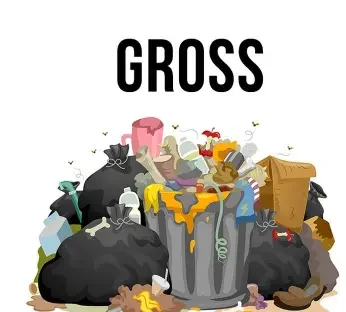
Synonyms For Gross disgusting or unpleasant

- Disgusting
- Revolting
- Repulsive
- Nauseating
- Sickening
- Offensive
- Unpleasant
- Nasty
- Foul
- Filthy
- Vile
- Horrible
- Distasteful
- Repugnant
- Abhorrent
Crude or offensive for Gross means
- Crude
- Vulgar
- Obscene
- Indecent
- Rude
- Lewd
- Coarse
- Tactless
- Unrefined
Before Gross means deductions
- Total
- Overall
- Aggregate
- Complete
- Combined
- Before-tax
- Undeducted
- Pre-deduction
Means Gross Large or substantial
- Large
- Huge
- Considerable
- Substantial
- Significant
- Extensive
- Massive
- Excessive
The important point is that these words are not interchangeable in every sentence. Disgusting cannot replace gross income, and total cannot replace gross behavior.
Formal Alternatives for Gross
Disgusting
Meaning: Extremely unpleasant or offensive to the senses.
Explanation: This is one of the closest alternatives when gross describes something that causes strong dislike or disgust.
Example: The smell from the spoiled food was disgusting.
Best Use: General writing, reports, reviews, and clear descriptions.
Worst Use: Financial contexts where gross means total.
Tone: Direct and strong.
Revolting
Meaning: Extremely unpleasant and likely to cause disgust.
Explanation: Revolting is stronger than ordinary unpleasant and works well when something creates a strong physical or emotional reaction.
Example: The investigators described the conditions as revolting.
Best Use: Formal descriptions, journalism, criticism, and serious writing.
Worst Use: Friendly everyday situations where it may sound overly dramatic.
Tone: Strong and serious.
Repulsive

Meaning: Causing intense dislike or disgust.
Explanation: This word emphasizes the quality of something that pushes people away.
Example: The substance had a repulsive odor.
Best Use: Formal, scientific, medical, or descriptive writing.
Worst Use: Casual conversations where disgusting may sound more natural.
Tone: Formal and forceful.
Nauseating

Meaning: Causing or likely to cause nausea or extreme disgust.
Explanation: It focuses on a reaction that makes someone feel physically sick.
Example: The chemical produced a nauseating smell.
Best Use: Describing odors, food, substances, or experiences.
Worst Use: Financial or numerical contexts.
Tone: Strong and descriptive.
Repugnant

Meaning: Extremely offensive or unacceptable.
Explanation: Repugnant often describes behavior, ideas, or actions that strongly violate moral or personal standards.
Example: The organization condemned the repugnant treatment of workers.
Best Use: Formal essays, reports, journalism, and serious criticism.
Worst Use: Lighthearted conversations.
Tone: Very formal and strong.
Offensive
Meaning: Causing anger, hurt, or disgust.
Explanation: This alternative is broader than gross. Something can be offensive without being physically disgusting.
Example: Several customers found the advertisement offensive.
Best Use: Workplace communication, public statements, reviews, and formal writing.
Worst Use: When you specifically mean something smells or tastes disgusting.
Tone: Neutral to formal.
Distasteful
Meaning: Unpleasant, inappropriate, or offensive.
Explanation: Distasteful is useful when you want to criticize something without sounding excessively harsh.
Example: The joke was considered distasteful by many employees.
Best Use: Professional and polite criticism.
Worst Use: Strong physical disgust.
Tone: Polite and restrained.
Vile
Meaning: Extremely unpleasant, morally bad, or disgusting.
Explanation: This is much stronger than gross in many contexts.
Example: The report described the conditions as vile.
Best Use: Strong criticism.
Worst Use: Professional situations requiring neutral language.
Tone: Very strong.
Crude
Meaning: Lacking refinement or good taste.
Explanation: Crude is usually better than gross when referring to rude jokes, language, manners, or behavior.
Example: His crude joke made the meeting uncomfortable.
Best Use: Workplace, academic, and social commentary.
Worst Use: When describing spoiled food or a bad smell.
Tone: Neutral to formal.
Vulgar
Meaning: Lacking sophistication or containing offensive language or behavior.
Explanation: Vulgar often describes speech, humor, gestures, or behavior rather than physical unpleasantness.
Example: The article was criticized for its vulgar language.
Best Use: Formal criticism of language or conduct.
Worst Use: Financial contexts.
Tone: Formal and critical.
Obscene
Meaning: Extremely offensive, especially in relation to sexual or explicit material.
Explanation: This is narrower and stronger than gross.
Example: The website removed obscene material.
Best Use: Content moderation, policy writing, and formal descriptions.
Worst Use: Ordinary unpleasant situations.
Tone: Formal and serious.
Aggregate
Meaning: Combined into a total.
Explanation: When gross means a total amount, aggregate can work in business, finance, economics, and data contexts.
Example: The aggregate sales figure increased during the quarter.
Best Use: Reports, statistics, finance, and academic writing.
Worst Use: Everyday conversation.
Tone: Formal and technical.
Total
Meaning: The complete amount.
Explanation: Total is often the clearest replacement for gross when referring to an amount before considering separate deductions or categories.
Example: The total revenue reached $2 million.
Best Use: Business, finance, reports, and everyday writing.
Worst Use: When gross means disgusting.
Tone: Neutral and highly versatile.
Substantial
Meaning: Large or significant in amount or importance.
Explanation: This can replace gross when the intended meaning is that something is notably large, but it does not mean exactly the same thing.
Example: The project required a substantial investment.
Best Use: Professional and academic writing.
Worst Use: When an exact numerical total is required.
Tone: Formal and neutral.
Semi-Formal & Neutral Alternatives
Unpleasant
Meaning: Not enjoyable, comfortable, or agreeable.
Explanation: A softer alternative to gross for smells, experiences, behavior, or conditions.
Example: The room had an unpleasant odor.
Best Use: Work, school, customer service, and polite conversation.
Worst Use: Extremely disgusting situations where stronger language is necessary.
Tone: Polite and neutral.
Nasty
Meaning: Very unpleasant, dirty, harmful, or offensive.
Explanation: Nasty is flexible but usually more conversational than repugnant or repulsive.
Example: There was a nasty smell coming from the kitchen.
Best Use: Everyday writing and informal communication.
Worst Use: Formal academic reports.
Tone: Casual to neutral.
Foul
Meaning: Extremely unpleasant, dirty, or offensive.
Explanation: Often used for smells, air, language, or conditions.
Example: A foul odor came from the drain.
Best Use: Everyday descriptions and practical writing.
Worst Use: Formal financial contexts.
Tone: Neutral and descriptive.
Filthy
Meaning: Extremely dirty or covered with dirt.
Explanation: Filthy describes physical dirt more specifically than gross.
Example: The workers cleaned the filthy floor.
Best Use: Describing physical cleanliness.
Worst Use: When you mean merely unpleasant.
Tone: Strong.
Huge
Meaning: Very large.
Explanation: This works only when gross means large or substantial, not when it means disgusting or total.
Example: The company received a huge order.
Best Use: General and informal writing.
Worst Use: Formal financial reports when precision matters.
Tone: Informal.
Considerable
Meaning: Fairly large or important.
Explanation: A polished alternative when describing a significant amount.
Example: The project required considerable effort.
Best Use: Academic and professional writing.
Worst Use: When an exact total is needed.
Tone: Formal-neutral.
Significant
Meaning: Important, meaningful, or large enough to matter.
Explanation: This can replace gross when the focus is importance or size.
Example: The policy caused a significant increase in costs.
Best Use: Reports, research, and business communication.
Worst Use: When describing something disgusting.
Tone: Professional.
Excessive
Meaning: More than is reasonable or necessary.
Explanation: This is narrower than gross. It describes an amount that is too high rather than simply large.
Example: The company was criticized for excessive spending.
Best Use: Reports, criticism, and policy writing.
Worst Use: When the amount is large but reasonable.
Tone: Formal and critical.
Extensive
Meaning: Large in size, range, or scope.
Explanation: Useful for describing broad work, damage, research, or coverage.
Example: The storm caused extensive damage.
Best Use: News, reports, academic writing, and business communication.
Worst Use: Describing a simple numerical total.
Tone: Formal-neutral.
Produced
Meaning: Made or created something.
Explanation: In some cause-and-effect sentences, produced can replace caused when the emphasis is on the resulting outcome.
Example: The new policy produced positive results.
Best Use: Reports and academic writing.
Worst Use: When the relationship is accidental and caused is more precise.
Tone: Neutral-formal.
Triggered
Meaning: Started or caused a reaction or event.
Explanation: Strong for events that happen as a direct response to something.
Example: The announcement triggered a strong reaction.
Best Use: News, business, psychology, technology, and everyday writing.
Worst Use: When there is no clear reaction.
Tone: Neutral.
Prompted
Meaning: Encouraged or caused someone to take an action.
Explanation: Unlike caused, prompted often involves a person responding to something.
Example: The message prompted him to call the office.
Best Use: Emails, reports, academic writing, and everyday communication.
Worst Use: When describing a purely physical cause.
Tone: Neutral and polished.
Informal and Casual Alternatives
Made
Meaning: Caused something to happen.
Example: The funny video made everyone laugh.
When it sounds natural: Everyday conversation and simple writing.
When to avoid it: Formal reports where precision matters.
Tone: Very natural and casual.
Got
Meaning: Caused someone or something to reach a state.
Example: That joke got everyone excited.
When it sounds natural: Casual speech and messages.
When to avoid it: Academic or formal professional writing.
Tone: Casual.
Brought on
Meaning: Caused something, often an unpleasant event or condition.
Example: Too much stress brought on his headache.
When it sounds natural: Everyday conversation and health-related descriptions.
When to avoid it: When the cause is uncertain.
Tone: Neutral-casual.
Set off
Meaning: Caused something to begin suddenly.
Example: The loud noise set off the alarm.
When it sounds natural: Events, alarms, reactions, and casual explanations.
When to avoid it: Formal writing where triggered or initiated may be better.
Tone: Casual-neutral.
Kicked off
Meaning: Started something.
Example: The announcement kicked off a lively discussion.
When it sounds natural: Meetings, events, campaigns, and casual professional communication.
When to avoid it: Legal or highly formal documents.
Tone: Casual and energetic.
Sparked
Meaning: Started an idea, reaction, discussion, or movement.
Example: Her comment sparked a useful conversation.
When it sounds natural: Articles, social media, conversations, and creative writing.
When to avoid it: Exact scientific cause-and-effect statements.
Tone: Vivid and conversational.
True Synonyms vs. Contextual Alternatives
Not every replacement for gross has the same meaning. The word itself is highly context-dependent.
| Type | What It Means | Can It Replace “Gross”? |
|---|---|---|
| True synonym | Very similar meaning in the same context | Usually |
| Near synonym | Similar but slightly different | Sometimes |
| Contextual alternative | Works only in a particular situation | Only in that context |
| Broader expression | Covers a wider meaning | Sometimes |
| Narrower expression | Describes one specific type of “gross” | Only when appropriate |
For example, disgusting is a close match for gross when describing something unpleasant. Total is appropriate when gross refers to an amount. Crude works for rude humor. Huge works only when the intended meaning is large.
The safest strategy is to identify what gross means in the sentence before choosing a replacement.
Industry-Specific Usage
Business Writing
In business writing, gross often refers to a total amount before deductions. Use total, aggregate, overall, pre-tax, or before deductions when they accurately describe the figure.
- Gross revenue → total revenue
- Gross income → income before deductions
- Gross profit → profit before certain expenses or costs
Do not replace a technical accounting term automatically. Financial terms can have specific meanings.
Corporate Communication
For workplace communication, choose words based on whether you are discussing money, behavior, quality, or size.
- Gross misconduct → serious misconduct
- Gross increase → substantial increase
- Gross revenue → total revenue
The best alternative should preserve the intended meaning rather than simply sound more sophisticated.
Academic Writing
Academic writing usually benefits from precision.
Instead of:
The experiment produced gross results.
Consider the intended meaning:
The experiment produced unacceptable results.
Or:
The experiment produced substantial variation.
The correct replacement depends on what gross actually means.
Customer Service
Customer-facing writing should usually avoid blunt language.
Instead of:
The product had a gross smell.
Use:
The product had an unpleasant odor.
Instead of:
The website is gross.
Use:
The website contains inappropriate material.
This makes complaints clearer and more professional.
Legal Writing
Legal writing requires particular care because words may carry specific meanings. Gross negligence, gross misconduct, and gross income should not be replaced casually.
For example, gross negligence is a legal or technical phrase in many contexts. Replacing it with very careless behavior may weaken or change the intended meaning. Legal documents should preserve established terminology unless a qualified professional recommends otherwise.
Email Communication
Professional emails usually benefit from neutral wording.
- Gross mistake → serious error
- Gross delay → significant delay
- Gross revenue → total revenue
- Gross odor → unpleasant odor
Choose the replacement based on the exact meaning rather than simply avoiding the word gross.
Email Examples
Client Communication
Subject: Update on the Product Issue
Hello Maria,
Thank you for bringing the issue to our attention. We identified an unpleasant odor in one batch and have paused distribution while the team investigates the cause.
We will share an update as soon as the review is complete.
Best,
James
Project Update
Subject: Project Cost Update
Hi Team,
The project has required a substantial additional investment due to the expanded testing phase. We are reviewing the budget and will share the revised figures tomorrow.
Best,
Daniel
Internal Workplace Email
Subject: Strong Reaction to the Announcement
Hi everyone,
The new policy announcement triggered several questions from employees. I have collected the main concerns and will discuss them with management this afternoon.
Thanks,
Sophie
Customer Service
Subject: Your Product Complaint
Hello Alex,
Thank you for contacting us. We are sorry that the product arrived with an unpleasant odor. We are reviewing the issue and will arrange a suitable solution.
Kind regards,
Customer Support
Academic Communication
Subject: Assignment Revision
Dear Professor Lee,
I revised the sentence to make the cause-and-effect relationship clearer. I replaced gross with substantial because the paragraph refers to the size of the change rather than an unpleasant quality.
Best regards,
Emily
Vendor Communication
Subject: Total Order Value
Hello Mark,
The total order value shown on the latest invoice differs from our records. Could you please review the figures and send us a corrected invoice if necessary?
Thank you,
Robert
Short Dialogue Examples
Workplace
Person A: The report says the project had a gross increase in costs.
Person B: If you mean the increase was large, substantial would be clearer.
Classroom
Person A: Can I call the experiment gross?
Person B: If you mean the results were unpleasant, yes, but unacceptable may sound more precise in an essay.
Customer Service
Person A: This product smells gross.
Person B: For a complaint, unpleasant odor sounds more professional.
Casual Conversation
Person A: That old food smells gross.
Person B: Yeah, nasty is probably the perfect word too.
Professional Discussion
Person A: What should we use instead of gross revenue?
Person B: Total revenue works if you are describing the full amount before the relevant deductions.
How to Replace “Gross” in a Sentence
Example 1
Original: The food smells gross.
Alternative: The food smells unpleasant.
Why it works: Unpleasant softens the statement while keeping the meaning clear.
Example 2
Original: The website contains gross images.
Alternative: The website contains offensive images.
Why it works: Offensive is more precise when the concern is inappropriate content.
Example 3
Original: The company reported gross revenue of $5 million.
Alternative: The company reported total revenue of $5 million.
Why it works: Total is appropriate when referring to the full revenue figure.
Example 4
Original: His gross joke offended the audience.
Alternative: His crude joke offended the audience.
Why it works: Crude specifically describes inappropriate or unrefined humor.
Example 5
Original: The storm caused gross damage.
Alternative: The storm caused extensive damage.
Why it works: Extensive clearly communicates a large scope of damage.
Example 6
Original: The announcement caused a reaction.
Alternative: The announcement triggered a reaction.
Why it works: Triggered emphasizes that the announcement started the response.
Example 7
Original: The project had a gross increase in costs.
Alternative: The project had a substantial increase in costs.
Why it works: Substantial is more natural when describing a significant increase.
Example 8
Original: The mistake was gross.
Alternative: The mistake was serious.
Why it works: Serious is clearer if you mean the mistake had important consequences rather than being disgusting.
Comparison Table
| Phrase | Tone | Meaning / Scope | Best Use | Example |
|---|---|---|---|---|
| Disgusting | Strong | Extremely unpleasant | Food, smells, behavior | The odor was disgusting. |
| Unpleasant | Neutral | Not pleasant | Professional complaints | The odor was unpleasant. |
| Repulsive | Strong/formal | Causes intense disgust | Serious descriptions | The smell was repulsive. |
| Crude | Neutral-formal | Unrefined or rude | Humor, language | His comment was crude. |
| Vulgar | Formal | Lacking refinement | Language or behavior | The remark was vulgar. |
| Total | Neutral | Complete amount | Finance | Total revenue increased. |
| Aggregate | Formal | Combined total | Data and reports | Aggregate costs rose. |
| Substantial | Formal | Large or significant | Business, academic | A substantial increase occurred. |
| Significant | Formal-neutral | Important or notable | Reports | A significant change occurred. |
| Extensive | Formal-neutral | Large in scope | Damage, research | Extensive damage was reported. |
| Triggered | Neutral | Started a reaction | Events | The news triggered concern. |
| Prompted | Neutral | Encouraged action | Emails, reports | The message prompted a response. |
| Sparked | Vivid | Started an idea or reaction | Articles, conversation | The post sparked debate. |
| Nasty | Casual | Very unpleasant | Everyday speech | That smell is nasty. |
| Set off | Casual-neutral | Caused something to begin | Alarms, reactions | The noise set off the alarm. |
Which Alternative Should You Choose?
For formal writing
Choose repugnant, repulsive, aggregate, substantial, significant, extensive, or total, depending on the meaning.
For business communication
Use total, aggregate, substantial, significant, extensive, triggered, or prompted when they accurately describe the situation.
For academic writing
Prefer precise words such as significant, substantial, extensive, prompted, triggered, produced, or resulted in.
For legal writing
Preserve established technical phrases such as gross negligence or gross misconduct unless there is a clear reason and qualified guidance for changing them.
For professional email
Use unpleasant, significant, substantial, total, prompted, or triggered where appropriate.
For everyday conversation
Disgusting, nasty, foul, huge, made, got, set off, and sparked may sound more natural.
For casual messages
Choose simple words such as nasty, huge, made, got, or set off.
Grammar & Usage Guide
1. “Gross” can be an adjective, verb-related modifier, or noun-related term
an adjective:
That smell is gross.
As part of a financial phrase:
The company reported gross income.
As a noun in a counting context:
The shipment contained a gross of pencils.
The correct synonym depends on which meaning is being used.
2. “Gross” and “caused” are not interchangeable
Gross does not generally mean caused. If you are looking for alternatives to caused, use words such as produced, triggered, prompted, led to, brought about, generated, or resulted in.
3. “Gross” income has a specific combination
Natural phrases include:
- gross income
- gross revenue
- gross profit
- gross salary
- gross pay
Replacing gross with total may work in some contexts, but technical financial definitions can differ.
4. “Gross” before a noun
Examples:
gross income
gross misconduct
gross negligence
gross amount
Do not assume the same synonym works in all four phrases.
5. “Gross” as a reaction
For casual speech:
That is gross.
More polite:
That is unpleasant.
More forceful:
That is revolting.
6. “Gross” and “excessive” are different
Gross can mean large in certain contexts, while excessive means more than is reasonable or necessary.
The company reported a large increase.
The company faced excessive spending.
These are not identical meanings.
Common Mistakes to Avoid
- Treating every alternative as an exact synonym
Disgusting and total represent completely different meanings of gross. - Using “huge” for financial terminology
If you mean a total amount, total is usually clearer than huge. - Using “gross” when you mean “caused”
These are different words with different grammatical functions. - Using strong language in professional writing
Vile or repulsive may sound unnecessarily aggressive in a business email. - Using casual alternatives in academic writing
Words such as nasty and got can weaken a formal paper. - Replacing technical financial terminology without checking meaning
Terms such as gross profit and gross income can have specific definitions. - Confusing “excessive” with “large”
Something can be substantial without being excessive. - Ignoring audience and context
A phrase that works in a text message may sound strange in a report.
When Not to Use “Gross”
You may want to avoid gross when:
- The audience expects formal language.
- The word could have more than one interpretation.
- A technical term requires greater precision.
- You are writing a polite customer complaint.
- You are describing financial information and need an exact term.
- You are writing an academic paper where stronger precision is preferred.
- The word sounds too casual for the audience.
- The reader might confuse “gross” with its financial meaning.
However, gross is often the best choice in everyday conversation:
That food smells gross.
It is short, natural, and immediately understandable.
Advanced Writer Tips
Tone Control
Use disgusting for direct everyday language, unpleasant for polite wording, and repugnant for very strong formal criticism.
For amounts, choose total or aggregate rather than trying to make the sentence sound more sophisticated.
Professional Email Etiquette
Professional writing usually benefits from specific language. Instead of saying something is gross, identify the actual problem:
The product has an unpleasant odor.
That sounds more useful and professional than simply saying:
The product smells gross.
Politeness
A small word change can make criticism less confrontational.
The packaging looks gross.
can become:
The packaging appears unappealing.
The second version is more restrained.
Context Alignment
Ask yourself what gross means before replacing it:
- Disgusting?
- Crude?
- Total?
- Large?
- Excessive?
That one question prevents most synonym mistakes.
Precision
Choose the narrowest accurate word. If a news report says an event triggered a reaction, triggered may be better than the broader caused.
Likewise, if a report describes a total financial figure, total may be better than a vague alternative.
Readability
Simple words are often stronger. Unpleasant may be better than repugnant when writing for a general audience. Use advanced vocabulary only when it adds accuracy.
Related Questions
What is another way to say gross?
It depends on the meaning. something disgusting, use disgusting, unpleasant, nasty, revolting, or repulsive. For an amount, use total or aggregate. For crude behavior, use vulgar, crude, or indecent.
What is a professional alternative to gross?
unpleasant things, unpleasant or distasteful usually works well. For financial figures, total or aggregate may be better. For a large amount, substantial or significant can sound more professional.
What is a formal synonym for gross?
There is no single formal replacement because gross has several meanings. Repugnant can work for strong disgust, aggregate for combined amounts, and substantial for significant size.
What can I use instead of gross in an email?
Choose a word that explains the problem more precisely. Try unpleasant for an odor, inappropriate for behavior, substantial for an increase, or total for a financial amount.
Is gross a formal word?
Gross itself is a standard English word and can be perfectly appropriate in formal contexts, especially in technical phrases such as gross income. However, its casual meaning of “disgusting” is usually less suitable for formal professional communication.
Can disgusting always replace gross?
No. Disgusting works when gross means unpleasant or repulsive. It cannot replace gross in phrases such as gross income or gross revenue, where gross refers to a financial amount before relevant deductions.
What is the difference between gross and disgusting?
Gross is broader and more informal when it means unpleasant. Disgusting directly describes something that causes strong dislike or disgust. Gross can also have completely different meanings, such as total income or a large quantity.
FAQs
What are the best synonyms for gross when it means disgusting?
The most useful choices include disgusting, unpleasant, nasty, revolting, repulsive, nauseating, foul, vile, and repugnant. The best option depends on intensity and tone. Unpleasant is polite, disgusting is direct, and repugnant is much stronger and more formal.
What are the best synonyms for gross in business writing?
For financial contexts, total, aggregate, overall, before-tax, or pre-deduction may be appropriate depending on the exact figure. For size, substantial or significant can work. Always preserve technical financial meaning rather than replacing gross simply for stylistic variety.
Can I use these alternatives in academic writing?
Yes, but select them carefully. Academic writing benefits from precision, so significant, substantial, extensive, triggered, prompted, produced, and resulted in may be useful depending on the sentence. Avoid casual choices such as nasty or got unless they appear in a quotation or specific linguistic discussion.
What is a polite alternative to gross?
Unpleasant is usually the safest polite alternative when discussing smells, food, experiences, or conditions. For behavior, distasteful or inappropriate may be better. The goal is to describe the specific problem without sounding unnecessarily harsh.
How can I avoid repeating the word gross?
First identify its meaning, then select a precise alternative. Use disgusting for strong dislike, unpleasant for a softer tone, crude for rude behavior, total for financial amounts, and substantial for size. Variety should improve accuracy, not simply change vocabulary.
Is gross the same as excessive?
No. Gross can sometimes suggest a large amount, but excessive specifically means more than is reasonable or necessary. For example, a substantial expense is large, while an excessive expense is considered unreasonably high.
Is gross suitable for professional emails?
It depends on the meaning. Gross income is perfectly normal in financial communication. But saying the product is gross may sound casual or unclear. A professional email should usually specify the problem, such as an unpleasant odor or inappropriate material.
Key Takeaways
- Gross has several meanings, so context should come before synonym choice.
- Use disgusting, unpleasant, or repulsive for unpleasant things.
- Use total, aggregate, or before-tax for appropriate financial meanings.
- Use crude, vulgar, or distasteful for offensive behavior or language.
- Choose the simplest accurate word that matches your audience, tone, and purpose.
Conclusion;
The best synonym for gross depends entirely on what you mean. If you are describing something unpleasant, words such as disgusting, unpleasant, nasty, revolting, and repulsive offer different levels of intensity. If you are discussing money, total or aggregate may be more appropriate, while substantial, significant, or extensive can describe size or scope. For crude language or behavior, crude, vulgar, distasteful, and offensive are more precise.
The key is not to replace gross simply because another word sounds more sophisticated. First identify the intended meaning, then choose the alternative that preserves that meaning and fits the audience. In professional and academic writing, precision matters more than vocabulary variety. In casual conversation, simple words often sound best.
